Light
Dark
Creative Industry
Culture & Tech
Future of Work
The Great Blanding
The “work” all around us is irredeemably worse. The hype-snorting frenzy of those who don’t know any better is violence wearing a badge that reads “innovation”. It erodes trust in the experts, or displaces them entirely. And the cost is being paid by real humans. This is a five-piece prosecution of what survives.
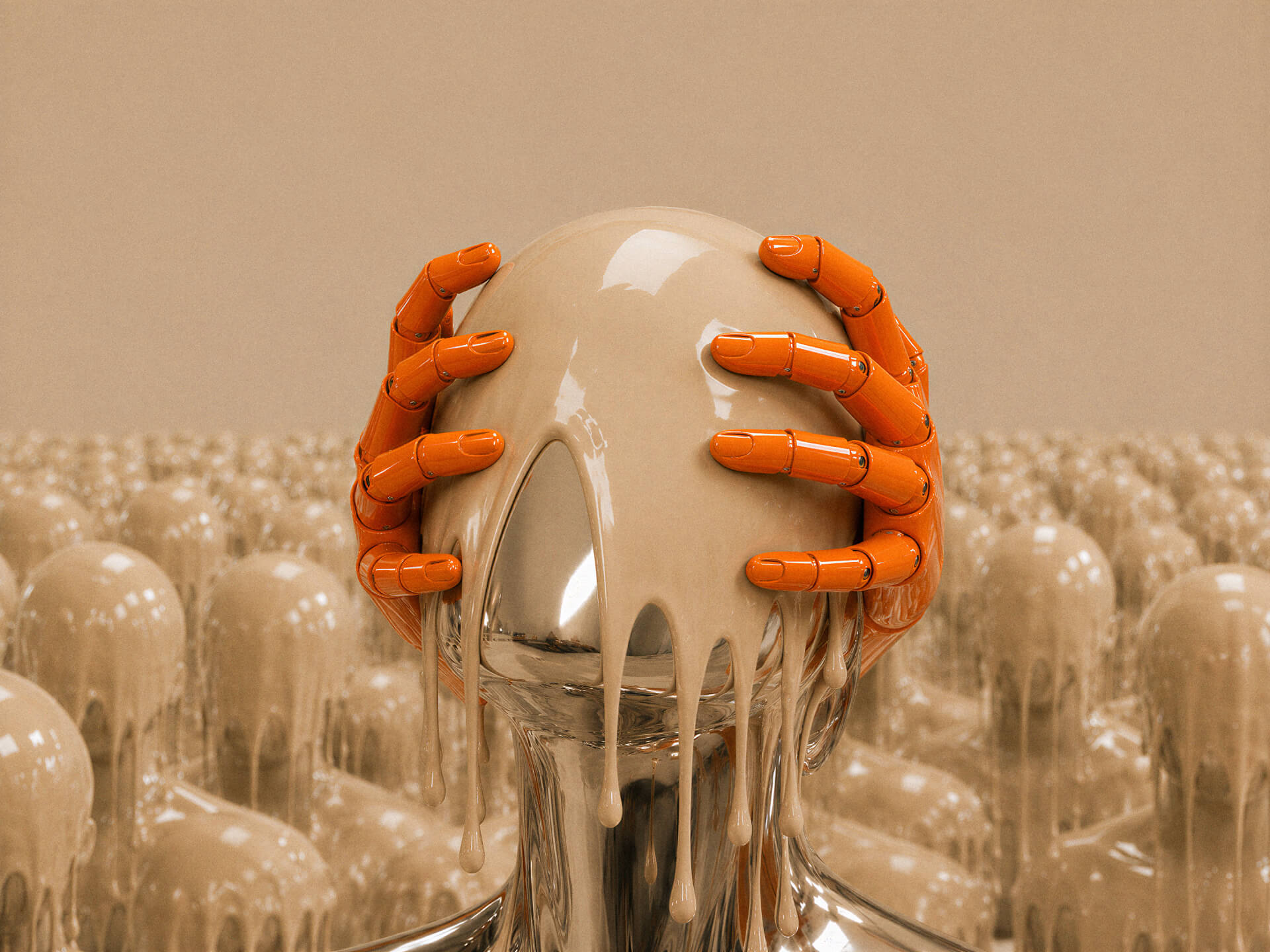
Five Pieces. One Argument. Nowhere to Hide.
There is an unraveling circus eating commercial culture. We’ve been watching it for two years. And we have a name for it.
The Great Blanding. The very visible and obvious-in-a-way-no-one-wants-to-admit flattening, enshittification, beige-ification of the work, the language, and the discourse, produced when AI is being used, at scale, as cover for decisions that were already cowardly and would have been embarrassing to defend in any other costume.
It’s not subtle. It’s not new. It is not, despite what the discourse keeps telling you, about AI. AI is the costume. The body underneath is older than the tech itself. Cowardice. Extraction. Laziness. The business-school instinct to ship the cheapest version of the thing and call it progress. The CEO instinct to fire the person who knew better and call it efficiency. The LinkedIn-influencer instinct to manufacture fear and sell its cure. None of these are new. The costume is.
We have prosecuted the costume across five pieces. Each piece is its own argument. Each piece names a specific actor, a specific mechanism, a specific cost, a specific victim. Read them in order. Read them out of order. Read one and not the others. Your poison, your choice. The argument compounds, regardless.
01 — The Violence of Hype and the Slow Invisibling
A person. A desk. At 11 PM. Doing math about rent and runway, trying to survive a wave that nobody asked them to stand in front of.
This is where the cost is actually being paid. Not in the LinkedIn discourse. Not in the keynote slides. In a kitchen, at night, by a senior practitioner whose authority has been quietly demoted while their job title has not. In a meeting room where a founder runs an AI demo and the six weeks of careful work the team did is sitting on a Figma board nobody opens anymore. In the body of a person who used to know that their position, their judgement, their experience mattered, and is no longer sure.
Read this one first. Everything else in the series is downstream of what is happening to that person, in that kitchen, tonight.
This is The Violence of Hype and the Slow Invisibling.
02 — The Great Industrial Cowardice
An executive at a real company spent an afternoon in Claude Code, prompted their way to a handful of pages, called it a website, and shipped the ugliest marketing site in their entire competitive category. Six weeks of paid design work, displaced. The executive defended the decision as efficiency, AI-nativity, whatever else could be glorified to serve itself. But it was what it was: a display of auto-fellatial supremacy.
Coca-Cola did the same thing at the scale of a Christmas ad. CNET did it at the scale of a thirty-year-old editorial brand.
Different scale. Different industry. Identical mechanics. A person with authority and a tool, choosing the tool over the authority of the experts they hired to do the work better. The work suffered. So did the people. The institution defended the inferior work rather than admit the work had been chosen for the wrong reasons. Then the institution called it innovation.
This is what cowardice looks like in 2026, dressed in the only costume the discourse currently rewards. It is not subtle. It is not unusual. It is everywhere.
This is The Great Industrial Cowardice.
03 — AI as Licensing Document
Read this sentence: “We are implementing AI-driven workflow modernization, resulting in 15% efficiency improvements across the organization.”
Now read this one: “We are firing 15% of the company.”
Same announcement. Different shroud of false. The first is investor-ready, press-friendly, LinkedIn-shareable. The second is what actually happened. AI has become the culturally protected phrase that launders previously-indefensible decisions into the language of progress.
When an executive tells you a decision is AI-driven, listen carefully to which of the words got deleted. The real reason is underneath. The AI frame is the licensing document that makes the real reason quotable.
Of the 1.2 million job cuts US companies announced in 2025, AI was cited as the reason for just 4.5%. The narrative is roughly an order of magnitude larger than the thing the narrative is describing. The AI frame is bigger than the AI itself.
Spoke three teaches you how to read the licensing document. After this one, you will not be able to unsee it.
This is AI as Licensing Document.
04 — The Grift Class and the Economy of Anxiety
There is a commercial class getting rich from your fear about AI. They sell prompt libraries on Gumroad for $49. Cohorts on LinkedIn for $497. Certificates from premier business schools for $5,000. Transformation engagements at enterprise prices for hundreds of thousands.
Five altitudes. Same product at every altitude. Relief from the anxiety their own content manufactured.
If the grifter stopped generating anxiety in their audience, the grifter would lose their business model. They cannot afford for you to feel calm.
And there is a reception-side grift waiting for the buyer at the other end of every transaction. The interviewer who dismisses the credential the institution sold. The peer at the conference who sneers at the consulting engagement the CEO commissioned. The buyer pays twice. Once on the way in. Once on the way out. The grifters on both sides pay nothing.
This piece names the species. After it, you will recognize them on every feed, in every inbox, at every price point. Then you will have to decide what to do about it.
This is about The Grift Class and the Economy of Anxiety.
05 — Human Craft Is Worth More Than Ever: What Survives the Blanding
Four pieces of prosecution. One piece of construction.
Execution has been commoditized. Human craft has not. The market is learning, faster than anyone predicted, to see the difference between what a person made and what a machine extruded. Spotify removed seventy-five million AI-generated tracks last year. A masked two-person Quebec band became the most viral group on the same platform. The most decorated animated TV series in Emmy history is the $250-million one made by hand. Vinyl is at a four-decade high. Substack has five million paying subscribers. Miyazaki’s “insult to life itself” is going viral again, a decade after he said it. Jensen Huang, the CEO of the company most responsible for the AI moment, is on stage refusing to repeat the doomer script.
The seam between human and machine is becoming the signal. Audiences can see it. They are paying for it. The premium is growing.
The practitioners who stay close to the actual work through this middle period will be the ones who emerge on the other side with an intact practice and a market newly ready to value it.
That is who this whole series is for.
This is about how Human Craft is Worth More Than Ever: What Survives the Blanding.
What This Series Is Asking You to Do.
Read all five. Or read the one that hits hardest and come back for the others. The argument stands. It compounds either way.
Then go make something. Not a hot take. Not an AI-assisted LinkedIn post. Actual work. The kind that has your judgement visible in every decision. Your fingerprints. Put your name on it. Put it where the right people can see it.
Refuse, on principle, to participate in the performance economy of your discipline. Silence is not absence. Silence is, more often than not, the sound of real work being produced by real people who just don’t have the time for the circus.
The grifters are loud. The licensing-document executives are confident. And yet, the market is already correcting. The Great Blanding feels permanent from the inside. It’s not.
You are not behind. You are building. Keep building.
We will see you on the other side.
SHARE THIS
Related Articles
Creative Industry
Culture & Tech
Future of Work
Human Craft Is Worth More Than Ever: What Survives the Blanding
1 May 2026
Creative Industry
Culture & Tech
Future of Work
The Grift Class and the Economy of Anxiety
28 Apr 2026
Creative Industry
Culture & Tech
Future of Work
AI as Licensing Document
25 Apr 2026
Creative Industry
Culture & Tech
Future of Work
The Great Blanding
The “work” all around us is irredeemably worse. The hype-snorting frenzy of those who don’t know any better is violence wearing a badge that reads “innovation”. It erodes trust in the experts, or displaces them entirely. And the cost is being paid by real humans. This is a five-piece prosecution of what survives.
Five Pieces. One Argument. Nowhere to Hide.
There is an unraveling circus eating commercial culture. We’ve been watching it for two years. And we have a name for it.
The Great Blanding. The very visible and obvious-in-a-way-no-one-wants-to-admit flattening, enshittification, beige-ification of the work, the language, and the discourse, produced when AI is being used, at scale, as cover for decisions that were already cowardly and would have been embarrassing to defend in any other costume.
It’s not subtle. It’s not new. It is not, despite what the discourse keeps telling you, about AI. AI is the costume. The body underneath is older than the tech itself. Cowardice. Extraction. Laziness. The business-school instinct to ship the cheapest version of the thing and call it progress. The CEO instinct to fire the person who knew better and call it efficiency. The LinkedIn-influencer instinct to manufacture fear and sell its cure. None of these are new. The costume is.
We have prosecuted the costume across five pieces. Each piece is its own argument. Each piece names a specific actor, a specific mechanism, a specific cost, a specific victim. Read them in order. Read them out of order. Read one and not the others. Your poison, your choice. The argument compounds, regardless.
01 — The Violence of Hype and the Slow Invisibling
A person. A desk. At 11 PM. Doing math about rent and runway, trying to survive a wave that nobody asked them to stand in front of.
This is where the cost is actually being paid. Not in the LinkedIn discourse. Not in the keynote slides. In a kitchen, at night, by a senior practitioner whose authority has been quietly demoted while their job title has not. In a meeting room where a founder runs an AI demo and the six weeks of careful work the team did is sitting on a Figma board nobody opens anymore. In the body of a person who used to know that their position, their judgement, their experience mattered, and is no longer sure.
Read this one first. Everything else in the series is downstream of what is happening to that person, in that kitchen, tonight.
This is The Violence of Hype and the Slow Invisibling.
02 — The Great Industrial Cowardice
An executive at a real company spent an afternoon in Claude Code, prompted their way to a handful of pages, called it a website, and shipped the ugliest marketing site in their entire competitive category. Six weeks of paid design work, displaced. The executive defended the decision as efficiency, AI-nativity, whatever else could be glorified to serve itself. But it was what it was: a display of auto-fellatial supremacy.
Coca-Cola did the same thing at the scale of a Christmas ad. CNET did it at the scale of a thirty-year-old editorial brand.
Different scale. Different industry. Identical mechanics. A person with authority and a tool, choosing the tool over the authority of the experts they hired to do the work better. The work suffered. So did the people. The institution defended the inferior work rather than admit the work had been chosen for the wrong reasons. Then the institution called it innovation.
This is what cowardice looks like in 2026, dressed in the only costume the discourse currently rewards. It is not subtle. It is not unusual. It is everywhere.
This is The Great Industrial Cowardice.
03 — AI as Licensing Document
Read this sentence: “We are implementing AI-driven workflow modernization, resulting in 15% efficiency improvements across the organization.”
Now read this one: “We are firing 15% of the company.”
Same announcement. Different shroud of false. The first is investor-ready, press-friendly, LinkedIn-shareable. The second is what actually happened. AI has become the culturally protected phrase that launders previously-indefensible decisions into the language of progress.
When an executive tells you a decision is AI-driven, listen carefully to which of the words got deleted. The real reason is underneath. The AI frame is the licensing document that makes the real reason quotable.
Of the 1.2 million job cuts US companies announced in 2025, AI was cited as the reason for just 4.5%. The narrative is roughly an order of magnitude larger than the thing the narrative is describing. The AI frame is bigger than the AI itself.
Spoke three teaches you how to read the licensing document. After this one, you will not be able to unsee it.
This is AI as Licensing Document.
04 — The Grift Class and the Economy of Anxiety
There is a commercial class getting rich from your fear about AI. They sell prompt libraries on Gumroad for $49. Cohorts on LinkedIn for $497. Certificates from premier business schools for $5,000. Transformation engagements at enterprise prices for hundreds of thousands.
Five altitudes. Same product at every altitude. Relief from the anxiety their own content manufactured.
If the grifter stopped generating anxiety in their audience, the grifter would lose their business model. They cannot afford for you to feel calm.
And there is a reception-side grift waiting for the buyer at the other end of every transaction. The interviewer who dismisses the credential the institution sold. The peer at the conference who sneers at the consulting engagement the CEO commissioned. The buyer pays twice. Once on the way in. Once on the way out. The grifters on both sides pay nothing.
This piece names the species. After it, you will recognize them on every feed, in every inbox, at every price point. Then you will have to decide what to do about it.
This is about The Grift Class and the Economy of Anxiety.
05 — Human Craft Is Worth More Than Ever: What Survives the Blanding
Four pieces of prosecution. One piece of construction.
Execution has been commoditized. Human craft has not. The market is learning, faster than anyone predicted, to see the difference between what a person made and what a machine extruded. Spotify removed seventy-five million AI-generated tracks last year. A masked two-person Quebec band became the most viral group on the same platform. The most decorated animated TV series in Emmy history is the $250-million one made by hand. Vinyl is at a four-decade high. Substack has five million paying subscribers. Miyazaki’s “insult to life itself” is going viral again, a decade after he said it. Jensen Huang, the CEO of the company most responsible for the AI moment, is on stage refusing to repeat the doomer script.
The seam between human and machine is becoming the signal. Audiences can see it. They are paying for it. The premium is growing.
The practitioners who stay close to the actual work through this middle period will be the ones who emerge on the other side with an intact practice and a market newly ready to value it.
That is who this whole series is for.
This is about how Human Craft is Worth More Than Ever: What Survives the Blanding.
What This Series Is Asking You to Do.
Read all five. Or read the one that hits hardest and come back for the others. The argument stands. It compounds either way.
Then go make something. Not a hot take. Not an AI-assisted LinkedIn post. Actual work. The kind that has your judgement visible in every decision. Your fingerprints. Put your name on it. Put it where the right people can see it.
Refuse, on principle, to participate in the performance economy of your discipline. Silence is not absence. Silence is, more often than not, the sound of real work being produced by real people who just don’t have the time for the circus.
The grifters are loud. The licensing-document executives are confident. And yet, the market is already correcting. The Great Blanding feels permanent from the inside. It’s not.
You are not behind. You are building. Keep building.
We will see you on the other side.
SHARE THIS
Related Articles
Creative Industry
Culture & Tech
Future of Work
Human Craft Is Worth More Than Ever: What Survives the Blanding
1 May 2026
Creative Industry
Culture & Tech
Future of Work
The Grift Class and the Economy of Anxiety
28 Apr 2026
Creative Industry
Culture & Tech
Future of Work
AI as Licensing Document
25 Apr 2026
Creative Industry
Culture & Tech
Future of Work
The Great Blanding
The “work” all around us is irredeemably worse. The hype-snorting frenzy of those who don’t know any better is violence wearing a badge that reads “innovation”. It erodes trust in the experts, or displaces them entirely. And the cost is being paid by real humans. This is a five-piece prosecution of what survives.
Five Pieces. One Argument. Nowhere to Hide.
There is an unraveling circus eating commercial culture. We’ve been watching it for two years. And we have a name for it.
The Great Blanding. The very visible and obvious-in-a-way-no-one-wants-to-admit flattening, enshittification, beige-ification of the work, the language, and the discourse, produced when AI is being used, at scale, as cover for decisions that were already cowardly and would have been embarrassing to defend in any other costume.
It’s not subtle. It’s not new. It is not, despite what the discourse keeps telling you, about AI. AI is the costume. The body underneath is older than the tech itself. Cowardice. Extraction. Laziness. The business-school instinct to ship the cheapest version of the thing and call it progress. The CEO instinct to fire the person who knew better and call it efficiency. The LinkedIn-influencer instinct to manufacture fear and sell its cure. None of these are new. The costume is.
We have prosecuted the costume across five pieces. Each piece is its own argument. Each piece names a specific actor, a specific mechanism, a specific cost, a specific victim. Read them in order. Read them out of order. Read one and not the others. Your poison, your choice. The argument compounds, regardless.
01 — The Violence of Hype and the Slow Invisibling
A person. A desk. At 11 PM. Doing math about rent and runway, trying to survive a wave that nobody asked them to stand in front of.
This is where the cost is actually being paid. Not in the LinkedIn discourse. Not in the keynote slides. In a kitchen, at night, by a senior practitioner whose authority has been quietly demoted while their job title has not. In a meeting room where a founder runs an AI demo and the six weeks of careful work the team did is sitting on a Figma board nobody opens anymore. In the body of a person who used to know that their position, their judgement, their experience mattered, and is no longer sure.
Read this one first. Everything else in the series is downstream of what is happening to that person, in that kitchen, tonight.
This is The Violence of Hype and the Slow Invisibling.
02 — The Great Industrial Cowardice
An executive at a real company spent an afternoon in Claude Code, prompted their way to a handful of pages, called it a website, and shipped the ugliest marketing site in their entire competitive category. Six weeks of paid design work, displaced. The executive defended the decision as efficiency, AI-nativity, whatever else could be glorified to serve itself. But it was what it was: a display of auto-fellatial supremacy.
Coca-Cola did the same thing at the scale of a Christmas ad. CNET did it at the scale of a thirty-year-old editorial brand.
Different scale. Different industry. Identical mechanics. A person with authority and a tool, choosing the tool over the authority of the experts they hired to do the work better. The work suffered. So did the people. The institution defended the inferior work rather than admit the work had been chosen for the wrong reasons. Then the institution called it innovation.
This is what cowardice looks like in 2026, dressed in the only costume the discourse currently rewards. It is not subtle. It is not unusual. It is everywhere.
This is The Great Industrial Cowardice.
03 — AI as Licensing Document
Read this sentence: “We are implementing AI-driven workflow modernization, resulting in 15% efficiency improvements across the organization.”
Now read this one: “We are firing 15% of the company.”
Same announcement. Different shroud of false. The first is investor-ready, press-friendly, LinkedIn-shareable. The second is what actually happened. AI has become the culturally protected phrase that launders previously-indefensible decisions into the language of progress.
When an executive tells you a decision is AI-driven, listen carefully to which of the words got deleted. The real reason is underneath. The AI frame is the licensing document that makes the real reason quotable.
Of the 1.2 million job cuts US companies announced in 2025, AI was cited as the reason for just 4.5%. The narrative is roughly an order of magnitude larger than the thing the narrative is describing. The AI frame is bigger than the AI itself.
Spoke three teaches you how to read the licensing document. After this one, you will not be able to unsee it.
This is AI as Licensing Document.
04 — The Grift Class and the Economy of Anxiety
There is a commercial class getting rich from your fear about AI. They sell prompt libraries on Gumroad for $49. Cohorts on LinkedIn for $497. Certificates from premier business schools for $5,000. Transformation engagements at enterprise prices for hundreds of thousands.
Five altitudes. Same product at every altitude. Relief from the anxiety their own content manufactured.
If the grifter stopped generating anxiety in their audience, the grifter would lose their business model. They cannot afford for you to feel calm.
And there is a reception-side grift waiting for the buyer at the other end of every transaction. The interviewer who dismisses the credential the institution sold. The peer at the conference who sneers at the consulting engagement the CEO commissioned. The buyer pays twice. Once on the way in. Once on the way out. The grifters on both sides pay nothing.
This piece names the species. After it, you will recognize them on every feed, in every inbox, at every price point. Then you will have to decide what to do about it.
This is about The Grift Class and the Economy of Anxiety.
05 — Human Craft Is Worth More Than Ever: What Survives the Blanding
Four pieces of prosecution. One piece of construction.
Execution has been commoditized. Human craft has not. The market is learning, faster than anyone predicted, to see the difference between what a person made and what a machine extruded. Spotify removed seventy-five million AI-generated tracks last year. A masked two-person Quebec band became the most viral group on the same platform. The most decorated animated TV series in Emmy history is the $250-million one made by hand. Vinyl is at a four-decade high. Substack has five million paying subscribers. Miyazaki’s “insult to life itself” is going viral again, a decade after he said it. Jensen Huang, the CEO of the company most responsible for the AI moment, is on stage refusing to repeat the doomer script.
The seam between human and machine is becoming the signal. Audiences can see it. They are paying for it. The premium is growing.
The practitioners who stay close to the actual work through this middle period will be the ones who emerge on the other side with an intact practice and a market newly ready to value it.
That is who this whole series is for.
This is about how Human Craft is Worth More Than Ever: What Survives the Blanding.
What This Series Is Asking You to Do.
Read all five. Or read the one that hits hardest and come back for the others. The argument stands. It compounds either way.
Then go make something. Not a hot take. Not an AI-assisted LinkedIn post. Actual work. The kind that has your judgement visible in every decision. Your fingerprints. Put your name on it. Put it where the right people can see it.
Refuse, on principle, to participate in the performance economy of your discipline. Silence is not absence. Silence is, more often than not, the sound of real work being produced by real people who just don’t have the time for the circus.
The grifters are loud. The licensing-document executives are confident. And yet, the market is already correcting. The Great Blanding feels permanent from the inside. It’s not.
You are not behind. You are building. Keep building.
We will see you on the other side.
Creative Industry
Culture & Tech
Future of Work
The Great Blanding
The “work” all around us is irredeemably worse. The hype-snorting frenzy of those who don’t know any better is violence wearing a badge that reads “innovation”. It erodes trust in the experts, or displaces them entirely. And the cost is being paid by real humans. This is a five-piece prosecution of what survives.
Five Pieces. One Argument. Nowhere to Hide.
There is an unraveling circus eating commercial culture. We’ve been watching it for two years. And we have a name for it.
The Great Blanding. The very visible and obvious-in-a-way-no-one-wants-to-admit flattening, enshittification, beige-ification of the work, the language, and the discourse, produced when AI is being used, at scale, as cover for decisions that were already cowardly and would have been embarrassing to defend in any other costume.
It’s not subtle. It’s not new. It is not, despite what the discourse keeps telling you, about AI. AI is the costume. The body underneath is older than the tech itself. Cowardice. Extraction. Laziness. The business-school instinct to ship the cheapest version of the thing and call it progress. The CEO instinct to fire the person who knew better and call it efficiency. The LinkedIn-influencer instinct to manufacture fear and sell its cure. None of these are new. The costume is.
We have prosecuted the costume across five pieces. Each piece is its own argument. Each piece names a specific actor, a specific mechanism, a specific cost, a specific victim. Read them in order. Read them out of order. Read one and not the others. Your poison, your choice. The argument compounds, regardless.
01 — The Violence of Hype and the Slow Invisibling
A person. A desk. At 11 PM. Doing math about rent and runway, trying to survive a wave that nobody asked them to stand in front of.
This is where the cost is actually being paid. Not in the LinkedIn discourse. Not in the keynote slides. In a kitchen, at night, by a senior practitioner whose authority has been quietly demoted while their job title has not. In a meeting room where a founder runs an AI demo and the six weeks of careful work the team did is sitting on a Figma board nobody opens anymore. In the body of a person who used to know that their position, their judgement, their experience mattered, and is no longer sure.
Read this one first. Everything else in the series is downstream of what is happening to that person, in that kitchen, tonight.
This is The Violence of Hype and the Slow Invisibling.
02 — The Great Industrial Cowardice
An executive at a real company spent an afternoon in Claude Code, prompted their way to a handful of pages, called it a website, and shipped the ugliest marketing site in their entire competitive category. Six weeks of paid design work, displaced. The executive defended the decision as efficiency, AI-nativity, whatever else could be glorified to serve itself. But it was what it was: a display of auto-fellatial supremacy.
Coca-Cola did the same thing at the scale of a Christmas ad. CNET did it at the scale of a thirty-year-old editorial brand.
Different scale. Different industry. Identical mechanics. A person with authority and a tool, choosing the tool over the authority of the experts they hired to do the work better. The work suffered. So did the people. The institution defended the inferior work rather than admit the work had been chosen for the wrong reasons. Then the institution called it innovation.
This is what cowardice looks like in 2026, dressed in the only costume the discourse currently rewards. It is not subtle. It is not unusual. It is everywhere.
This is The Great Industrial Cowardice.
03 — AI as Licensing Document
Read this sentence: “We are implementing AI-driven workflow modernization, resulting in 15% efficiency improvements across the organization.”
Now read this one: “We are firing 15% of the company.”
Same announcement. Different shroud of false. The first is investor-ready, press-friendly, LinkedIn-shareable. The second is what actually happened. AI has become the culturally protected phrase that launders previously-indefensible decisions into the language of progress.
When an executive tells you a decision is AI-driven, listen carefully to which of the words got deleted. The real reason is underneath. The AI frame is the licensing document that makes the real reason quotable.
Of the 1.2 million job cuts US companies announced in 2025, AI was cited as the reason for just 4.5%. The narrative is roughly an order of magnitude larger than the thing the narrative is describing. The AI frame is bigger than the AI itself.
Spoke three teaches you how to read the licensing document. After this one, you will not be able to unsee it.
This is AI as Licensing Document.
04 — The Grift Class and the Economy of Anxiety
There is a commercial class getting rich from your fear about AI. They sell prompt libraries on Gumroad for $49. Cohorts on LinkedIn for $497. Certificates from premier business schools for $5,000. Transformation engagements at enterprise prices for hundreds of thousands.
Five altitudes. Same product at every altitude. Relief from the anxiety their own content manufactured.
If the grifter stopped generating anxiety in their audience, the grifter would lose their business model. They cannot afford for you to feel calm.
And there is a reception-side grift waiting for the buyer at the other end of every transaction. The interviewer who dismisses the credential the institution sold. The peer at the conference who sneers at the consulting engagement the CEO commissioned. The buyer pays twice. Once on the way in. Once on the way out. The grifters on both sides pay nothing.
This piece names the species. After it, you will recognize them on every feed, in every inbox, at every price point. Then you will have to decide what to do about it.
This is about The Grift Class and the Economy of Anxiety.
05 — Human Craft Is Worth More Than Ever: What Survives the Blanding
Four pieces of prosecution. One piece of construction.
Execution has been commoditized. Human craft has not. The market is learning, faster than anyone predicted, to see the difference between what a person made and what a machine extruded. Spotify removed seventy-five million AI-generated tracks last year. A masked two-person Quebec band became the most viral group on the same platform. The most decorated animated TV series in Emmy history is the $250-million one made by hand. Vinyl is at a four-decade high. Substack has five million paying subscribers. Miyazaki’s “insult to life itself” is going viral again, a decade after he said it. Jensen Huang, the CEO of the company most responsible for the AI moment, is on stage refusing to repeat the doomer script.
The seam between human and machine is becoming the signal. Audiences can see it. They are paying for it. The premium is growing.
The practitioners who stay close to the actual work through this middle period will be the ones who emerge on the other side with an intact practice and a market newly ready to value it.
That is who this whole series is for.
This is about how Human Craft is Worth More Than Ever: What Survives the Blanding.
What This Series Is Asking You to Do.
Read all five. Or read the one that hits hardest and come back for the others. The argument stands. It compounds either way.
Then go make something. Not a hot take. Not an AI-assisted LinkedIn post. Actual work. The kind that has your judgement visible in every decision. Your fingerprints. Put your name on it. Put it where the right people can see it.
Refuse, on principle, to participate in the performance economy of your discipline. Silence is not absence. Silence is, more often than not, the sound of real work being produced by real people who just don’t have the time for the circus.
The grifters are loud. The licensing-document executives are confident. And yet, the market is already correcting. The Great Blanding feels permanent from the inside. It’s not.
You are not behind. You are building. Keep building.
We will see you on the other side.
Creative Industry
Culture & Tech
Future of Work
The Great Blanding
The “work” all around us is irredeemably worse. The hype-snorting frenzy of those who don’t know any better is violence wearing a badge that reads “innovation”. It erodes trust in the experts, or displaces them entirely. And the cost is being paid by real humans. This is a five-piece prosecution of what survives.
Five Pieces. One Argument. Nowhere to Hide.
There is an unraveling circus eating commercial culture. We’ve been watching it for two years. And we have a name for it.
The Great Blanding. The very visible and obvious-in-a-way-no-one-wants-to-admit flattening, enshittification, beige-ification of the work, the language, and the discourse, produced when AI is being used, at scale, as cover for decisions that were already cowardly and would have been embarrassing to defend in any other costume.
It’s not subtle. It’s not new. It is not, despite what the discourse keeps telling you, about AI. AI is the costume. The body underneath is older than the tech itself. Cowardice. Extraction. Laziness. The business-school instinct to ship the cheapest version of the thing and call it progress. The CEO instinct to fire the person who knew better and call it efficiency. The LinkedIn-influencer instinct to manufacture fear and sell its cure. None of these are new. The costume is.
We have prosecuted the costume across five pieces. Each piece is its own argument. Each piece names a specific actor, a specific mechanism, a specific cost, a specific victim. Read them in order. Read them out of order. Read one and not the others. Your poison, your choice. The argument compounds, regardless.
01 — The Violence of Hype and the Slow Invisibling
A person. A desk. At 11 PM. Doing math about rent and runway, trying to survive a wave that nobody asked them to stand in front of.
This is where the cost is actually being paid. Not in the LinkedIn discourse. Not in the keynote slides. In a kitchen, at night, by a senior practitioner whose authority has been quietly demoted while their job title has not. In a meeting room where a founder runs an AI demo and the six weeks of careful work the team did is sitting on a Figma board nobody opens anymore. In the body of a person who used to know that their position, their judgement, their experience mattered, and is no longer sure.
Read this one first. Everything else in the series is downstream of what is happening to that person, in that kitchen, tonight.
This is The Violence of Hype and the Slow Invisibling.
02 — The Great Industrial Cowardice
An executive at a real company spent an afternoon in Claude Code, prompted their way to a handful of pages, called it a website, and shipped the ugliest marketing site in their entire competitive category. Six weeks of paid design work, displaced. The executive defended the decision as efficiency, AI-nativity, whatever else could be glorified to serve itself. But it was what it was: a display of auto-fellatial supremacy.
Coca-Cola did the same thing at the scale of a Christmas ad. CNET did it at the scale of a thirty-year-old editorial brand.
Different scale. Different industry. Identical mechanics. A person with authority and a tool, choosing the tool over the authority of the experts they hired to do the work better. The work suffered. So did the people. The institution defended the inferior work rather than admit the work had been chosen for the wrong reasons. Then the institution called it innovation.
This is what cowardice looks like in 2026, dressed in the only costume the discourse currently rewards. It is not subtle. It is not unusual. It is everywhere.
This is The Great Industrial Cowardice.
03 — AI as Licensing Document
Read this sentence: “We are implementing AI-driven workflow modernization, resulting in 15% efficiency improvements across the organization.”
Now read this one: “We are firing 15% of the company.”
Same announcement. Different shroud of false. The first is investor-ready, press-friendly, LinkedIn-shareable. The second is what actually happened. AI has become the culturally protected phrase that launders previously-indefensible decisions into the language of progress.
When an executive tells you a decision is AI-driven, listen carefully to which of the words got deleted. The real reason is underneath. The AI frame is the licensing document that makes the real reason quotable.
Of the 1.2 million job cuts US companies announced in 2025, AI was cited as the reason for just 4.5%. The narrative is roughly an order of magnitude larger than the thing the narrative is describing. The AI frame is bigger than the AI itself.
Spoke three teaches you how to read the licensing document. After this one, you will not be able to unsee it.
This is AI as Licensing Document.
04 — The Grift Class and the Economy of Anxiety
There is a commercial class getting rich from your fear about AI. They sell prompt libraries on Gumroad for $49. Cohorts on LinkedIn for $497. Certificates from premier business schools for $5,000. Transformation engagements at enterprise prices for hundreds of thousands.
Five altitudes. Same product at every altitude. Relief from the anxiety their own content manufactured.
If the grifter stopped generating anxiety in their audience, the grifter would lose their business model. They cannot afford for you to feel calm.
And there is a reception-side grift waiting for the buyer at the other end of every transaction. The interviewer who dismisses the credential the institution sold. The peer at the conference who sneers at the consulting engagement the CEO commissioned. The buyer pays twice. Once on the way in. Once on the way out. The grifters on both sides pay nothing.
This piece names the species. After it, you will recognize them on every feed, in every inbox, at every price point. Then you will have to decide what to do about it.
This is about The Grift Class and the Economy of Anxiety.
05 — Human Craft Is Worth More Than Ever: What Survives the Blanding
Four pieces of prosecution. One piece of construction.
Execution has been commoditized. Human craft has not. The market is learning, faster than anyone predicted, to see the difference between what a person made and what a machine extruded. Spotify removed seventy-five million AI-generated tracks last year. A masked two-person Quebec band became the most viral group on the same platform. The most decorated animated TV series in Emmy history is the $250-million one made by hand. Vinyl is at a four-decade high. Substack has five million paying subscribers. Miyazaki’s “insult to life itself” is going viral again, a decade after he said it. Jensen Huang, the CEO of the company most responsible for the AI moment, is on stage refusing to repeat the doomer script.
The seam between human and machine is becoming the signal. Audiences can see it. They are paying for it. The premium is growing.
The practitioners who stay close to the actual work through this middle period will be the ones who emerge on the other side with an intact practice and a market newly ready to value it.
That is who this whole series is for.
This is about how Human Craft is Worth More Than Ever: What Survives the Blanding.
What This Series Is Asking You to Do.
Read all five. Or read the one that hits hardest and come back for the others. The argument stands. It compounds either way.
Then go make something. Not a hot take. Not an AI-assisted LinkedIn post. Actual work. The kind that has your judgement visible in every decision. Your fingerprints. Put your name on it. Put it where the right people can see it.
Refuse, on principle, to participate in the performance economy of your discipline. Silence is not absence. Silence is, more often than not, the sound of real work being produced by real people who just don’t have the time for the circus.
The grifters are loud. The licensing-document executives are confident. And yet, the market is already correcting. The Great Blanding feels permanent from the inside. It’s not.
You are not behind. You are building. Keep building.
We will see you on the other side.
SHARE THIS
Related Articles
Creative Industry
Culture & Tech
Future of Work
Human Craft Is Worth More Than Ever: What Survives the Blanding
1 May 2026
Creative Industry
Culture & Tech
Future of Work
The Grift Class and the Economy of Anxiety
28 Apr 2026
Creative Industry
Culture & Tech
Future of Work
AI as Licensing Document
25 Apr 2026
Creative Industry
Culture & Tech
Future of Work
The Great Blanding
The “work” all around us is irredeemably worse. The hype-snorting frenzy of those who don’t know any better is violence wearing a badge that reads “innovation”. It erodes trust in the experts, or displaces them entirely. And the cost is being paid by real humans. This is a five-piece prosecution of what survives.
Five Pieces. One Argument. Nowhere to Hide.
There is an unraveling circus eating commercial culture. We’ve been watching it for two years. And we have a name for it.
The Great Blanding. The very visible and obvious-in-a-way-no-one-wants-to-admit flattening, enshittification, beige-ification of the work, the language, and the discourse, produced when AI is being used, at scale, as cover for decisions that were already cowardly and would have been embarrassing to defend in any other costume.
It’s not subtle. It’s not new. It is not, despite what the discourse keeps telling you, about AI. AI is the costume. The body underneath is older than the tech itself. Cowardice. Extraction. Laziness. The business-school instinct to ship the cheapest version of the thing and call it progress. The CEO instinct to fire the person who knew better and call it efficiency. The LinkedIn-influencer instinct to manufacture fear and sell its cure. None of these are new. The costume is.
We have prosecuted the costume across five pieces. Each piece is its own argument. Each piece names a specific actor, a specific mechanism, a specific cost, a specific victim. Read them in order. Read them out of order. Read one and not the others. Your poison, your choice. The argument compounds, regardless.
01 — The Violence of Hype and the Slow Invisibling
A person. A desk. At 11 PM. Doing math about rent and runway, trying to survive a wave that nobody asked them to stand in front of.
This is where the cost is actually being paid. Not in the LinkedIn discourse. Not in the keynote slides. In a kitchen, at night, by a senior practitioner whose authority has been quietly demoted while their job title has not. In a meeting room where a founder runs an AI demo and the six weeks of careful work the team did is sitting on a Figma board nobody opens anymore. In the body of a person who used to know that their position, their judgement, their experience mattered, and is no longer sure.
Read this one first. Everything else in the series is downstream of what is happening to that person, in that kitchen, tonight.
This is The Violence of Hype and the Slow Invisibling.
02 — The Great Industrial Cowardice
An executive at a real company spent an afternoon in Claude Code, prompted their way to a handful of pages, called it a website, and shipped the ugliest marketing site in their entire competitive category. Six weeks of paid design work, displaced. The executive defended the decision as efficiency, AI-nativity, whatever else could be glorified to serve itself. But it was what it was: a display of auto-fellatial supremacy.
Coca-Cola did the same thing at the scale of a Christmas ad. CNET did it at the scale of a thirty-year-old editorial brand.
Different scale. Different industry. Identical mechanics. A person with authority and a tool, choosing the tool over the authority of the experts they hired to do the work better. The work suffered. So did the people. The institution defended the inferior work rather than admit the work had been chosen for the wrong reasons. Then the institution called it innovation.
This is what cowardice looks like in 2026, dressed in the only costume the discourse currently rewards. It is not subtle. It is not unusual. It is everywhere.
This is The Great Industrial Cowardice.
03 — AI as Licensing Document
Read this sentence: “We are implementing AI-driven workflow modernization, resulting in 15% efficiency improvements across the organization.”
Now read this one: “We are firing 15% of the company.”
Same announcement. Different shroud of false. The first is investor-ready, press-friendly, LinkedIn-shareable. The second is what actually happened. AI has become the culturally protected phrase that launders previously-indefensible decisions into the language of progress.
When an executive tells you a decision is AI-driven, listen carefully to which of the words got deleted. The real reason is underneath. The AI frame is the licensing document that makes the real reason quotable.
Of the 1.2 million job cuts US companies announced in 2025, AI was cited as the reason for just 4.5%. The narrative is roughly an order of magnitude larger than the thing the narrative is describing. The AI frame is bigger than the AI itself.
Spoke three teaches you how to read the licensing document. After this one, you will not be able to unsee it.
This is AI as Licensing Document.
04 — The Grift Class and the Economy of Anxiety
There is a commercial class getting rich from your fear about AI. They sell prompt libraries on Gumroad for $49. Cohorts on LinkedIn for $497. Certificates from premier business schools for $5,000. Transformation engagements at enterprise prices for hundreds of thousands.
Five altitudes. Same product at every altitude. Relief from the anxiety their own content manufactured.
If the grifter stopped generating anxiety in their audience, the grifter would lose their business model. They cannot afford for you to feel calm.
And there is a reception-side grift waiting for the buyer at the other end of every transaction. The interviewer who dismisses the credential the institution sold. The peer at the conference who sneers at the consulting engagement the CEO commissioned. The buyer pays twice. Once on the way in. Once on the way out. The grifters on both sides pay nothing.
This piece names the species. After it, you will recognize them on every feed, in every inbox, at every price point. Then you will have to decide what to do about it.
This is about The Grift Class and the Economy of Anxiety.
05 — Human Craft Is Worth More Than Ever: What Survives the Blanding
Four pieces of prosecution. One piece of construction.
Execution has been commoditized. Human craft has not. The market is learning, faster than anyone predicted, to see the difference between what a person made and what a machine extruded. Spotify removed seventy-five million AI-generated tracks last year. A masked two-person Quebec band became the most viral group on the same platform. The most decorated animated TV series in Emmy history is the $250-million one made by hand. Vinyl is at a four-decade high. Substack has five million paying subscribers. Miyazaki’s “insult to life itself” is going viral again, a decade after he said it. Jensen Huang, the CEO of the company most responsible for the AI moment, is on stage refusing to repeat the doomer script.
The seam between human and machine is becoming the signal. Audiences can see it. They are paying for it. The premium is growing.
The practitioners who stay close to the actual work through this middle period will be the ones who emerge on the other side with an intact practice and a market newly ready to value it.
That is who this whole series is for.
This is about how Human Craft is Worth More Than Ever: What Survives the Blanding.
What This Series Is Asking You to Do.
Read all five. Or read the one that hits hardest and come back for the others. The argument stands. It compounds either way.
Then go make something. Not a hot take. Not an AI-assisted LinkedIn post. Actual work. The kind that has your judgement visible in every decision. Your fingerprints. Put your name on it. Put it where the right people can see it.
Refuse, on principle, to participate in the performance economy of your discipline. Silence is not absence. Silence is, more often than not, the sound of real work being produced by real people who just don’t have the time for the circus.
The grifters are loud. The licensing-document executives are confident. And yet, the market is already correcting. The Great Blanding feels permanent from the inside. It’s not.
You are not behind. You are building. Keep building.
We will see you on the other side.
SHARE THIS
Related Articles
Creative Industry
Culture & Tech
Future of Work
Human Craft Is Worth More Than Ever: What Survives the Blanding
1 May 2026
Creative Industry
Culture & Tech
Future of Work
The Grift Class and the Economy of Anxiety
28 Apr 2026
Creative Industry
Culture & Tech
Future of Work
AI as Licensing Document
25 Apr 2026
Creative Industry
Culture & Tech
Future of Work
The Great Blanding
The “work” all around us is irredeemably worse. The hype-snorting frenzy of those who don’t know any better is violence wearing a badge that reads “innovation”. It erodes trust in the experts, or displaces them entirely. And the cost is being paid by real humans. This is a five-piece prosecution of what survives.
Five Pieces. One Argument. Nowhere to Hide.
There is an unraveling circus eating commercial culture. We’ve been watching it for two years. And we have a name for it.
The Great Blanding. The very visible and obvious-in-a-way-no-one-wants-to-admit flattening, enshittification, beige-ification of the work, the language, and the discourse, produced when AI is being used, at scale, as cover for decisions that were already cowardly and would have been embarrassing to defend in any other costume.
It’s not subtle. It’s not new. It is not, despite what the discourse keeps telling you, about AI. AI is the costume. The body underneath is older than the tech itself. Cowardice. Extraction. Laziness. The business-school instinct to ship the cheapest version of the thing and call it progress. The CEO instinct to fire the person who knew better and call it efficiency. The LinkedIn-influencer instinct to manufacture fear and sell its cure. None of these are new. The costume is.
We have prosecuted the costume across five pieces. Each piece is its own argument. Each piece names a specific actor, a specific mechanism, a specific cost, a specific victim. Read them in order. Read them out of order. Read one and not the others. Your poison, your choice. The argument compounds, regardless.
01 — The Violence of Hype and the Slow Invisibling
A person. A desk. At 11 PM. Doing math about rent and runway, trying to survive a wave that nobody asked them to stand in front of.
This is where the cost is actually being paid. Not in the LinkedIn discourse. Not in the keynote slides. In a kitchen, at night, by a senior practitioner whose authority has been quietly demoted while their job title has not. In a meeting room where a founder runs an AI demo and the six weeks of careful work the team did is sitting on a Figma board nobody opens anymore. In the body of a person who used to know that their position, their judgement, their experience mattered, and is no longer sure.
Read this one first. Everything else in the series is downstream of what is happening to that person, in that kitchen, tonight.
This is The Violence of Hype and the Slow Invisibling.
02 — The Great Industrial Cowardice
An executive at a real company spent an afternoon in Claude Code, prompted their way to a handful of pages, called it a website, and shipped the ugliest marketing site in their entire competitive category. Six weeks of paid design work, displaced. The executive defended the decision as efficiency, AI-nativity, whatever else could be glorified to serve itself. But it was what it was: a display of auto-fellatial supremacy.
Coca-Cola did the same thing at the scale of a Christmas ad. CNET did it at the scale of a thirty-year-old editorial brand.
Different scale. Different industry. Identical mechanics. A person with authority and a tool, choosing the tool over the authority of the experts they hired to do the work better. The work suffered. So did the people. The institution defended the inferior work rather than admit the work had been chosen for the wrong reasons. Then the institution called it innovation.
This is what cowardice looks like in 2026, dressed in the only costume the discourse currently rewards. It is not subtle. It is not unusual. It is everywhere.
This is The Great Industrial Cowardice.
03 — AI as Licensing Document
Read this sentence: “We are implementing AI-driven workflow modernization, resulting in 15% efficiency improvements across the organization.”
Now read this one: “We are firing 15% of the company.”
Same announcement. Different shroud of false. The first is investor-ready, press-friendly, LinkedIn-shareable. The second is what actually happened. AI has become the culturally protected phrase that launders previously-indefensible decisions into the language of progress.
When an executive tells you a decision is AI-driven, listen carefully to which of the words got deleted. The real reason is underneath. The AI frame is the licensing document that makes the real reason quotable.
Of the 1.2 million job cuts US companies announced in 2025, AI was cited as the reason for just 4.5%. The narrative is roughly an order of magnitude larger than the thing the narrative is describing. The AI frame is bigger than the AI itself.
Spoke three teaches you how to read the licensing document. After this one, you will not be able to unsee it.
This is AI as Licensing Document.
04 — The Grift Class and the Economy of Anxiety
There is a commercial class getting rich from your fear about AI. They sell prompt libraries on Gumroad for $49. Cohorts on LinkedIn for $497. Certificates from premier business schools for $5,000. Transformation engagements at enterprise prices for hundreds of thousands.
Five altitudes. Same product at every altitude. Relief from the anxiety their own content manufactured.
If the grifter stopped generating anxiety in their audience, the grifter would lose their business model. They cannot afford for you to feel calm.
And there is a reception-side grift waiting for the buyer at the other end of every transaction. The interviewer who dismisses the credential the institution sold. The peer at the conference who sneers at the consulting engagement the CEO commissioned. The buyer pays twice. Once on the way in. Once on the way out. The grifters on both sides pay nothing.
This piece names the species. After it, you will recognize them on every feed, in every inbox, at every price point. Then you will have to decide what to do about it.
This is about The Grift Class and the Economy of Anxiety.
05 — Human Craft Is Worth More Than Ever: What Survives the Blanding
Four pieces of prosecution. One piece of construction.
Execution has been commoditized. Human craft has not. The market is learning, faster than anyone predicted, to see the difference between what a person made and what a machine extruded. Spotify removed seventy-five million AI-generated tracks last year. A masked two-person Quebec band became the most viral group on the same platform. The most decorated animated TV series in Emmy history is the $250-million one made by hand. Vinyl is at a four-decade high. Substack has five million paying subscribers. Miyazaki’s “insult to life itself” is going viral again, a decade after he said it. Jensen Huang, the CEO of the company most responsible for the AI moment, is on stage refusing to repeat the doomer script.
The seam between human and machine is becoming the signal. Audiences can see it. They are paying for it. The premium is growing.
The practitioners who stay close to the actual work through this middle period will be the ones who emerge on the other side with an intact practice and a market newly ready to value it.
That is who this whole series is for.
This is about how Human Craft is Worth More Than Ever: What Survives the Blanding.
What This Series Is Asking You to Do.
Read all five. Or read the one that hits hardest and come back for the others. The argument stands. It compounds either way.
Then go make something. Not a hot take. Not an AI-assisted LinkedIn post. Actual work. The kind that has your judgement visible in every decision. Your fingerprints. Put your name on it. Put it where the right people can see it.
Refuse, on principle, to participate in the performance economy of your discipline. Silence is not absence. Silence is, more often than not, the sound of real work being produced by real people who just don’t have the time for the circus.
The grifters are loud. The licensing-document executives are confident. And yet, the market is already correcting. The Great Blanding feels permanent from the inside. It’s not.
You are not behind. You are building. Keep building.
We will see you on the other side.
/
Blog